What It Costs to Heat an Orleans County Home This Winter, Fuel by Fuel
November 26, 2026
In June 2026, the Vermont Department of Public Service's survey of heating fuel retailers put a gallon of fuel oil at $4.28. By September the same survey showed $5.87. Propane barely moved over those four months, from $2.99 to $3.09 a gallon, according to the department's monthly price table. In October, Vermont Public reported that oil for home heat cost about $2 a gallon more than it had a year earlier.
If you're comparing homes in Newport, Derby, Barton, Glover or Jay right now, those numbers change how you read a listing. This winter the line that matters most is the second heat source: the wood stove in the living room, the heat pump on the wall, or nothing. A house with one fuel locks its owner into whatever that fuel costs in February. A house with two lets the owner switch to the cheaper one as prices move.
Fuels sold by the gallon don't compare directly, because a gallon of oil holds more heat than a gallon of propane. The Northeastern Vermont Development Association's regional energy plan, reprinted in the Village of Orleans' 2019 integrated resource plan, uses 138,200 BTUs for a gallon of fuel oil and 91,600 for a gallon of propane. Converted with those figures, the Department of Public Service averages work out like this.
In June 2026, oil cost about $30.97 per million BTUs and propane about $32.64. Oil was the slightly cheaper fuel, by roughly 5 percent. In September 2026, oil cost about $42.47 per million BTUs and propane about $33.73, so oil cost about 25 percent more for the same heat. The houses and furnaces stayed the same, yet the order of the two fuels reversed within one summer.
Prices into the heating season have kept moving. The U.S. Energy Information Administration's weekly Vermont survey for November 16, 2026, released November 18, put residential heating oil at $5.624 a gallon and propane at $3.990, both before taxes. At those mid-November prices oil comes to about $40.69 per million BTUs and propane about $43.56, so the two are close again. WCAX reported in early October on an EIA outlook that households heating with oil might pay about 20 percent more this winter, while propane and electric households might pay slightly less than last winter.
For a buyer, what matters is how much the prices swing, more than which fuel is cheapest this week. An oil-only farmhouse in Irasburg and a propane-only cape in Derby can trade places on running cost within a few months. Neither owner can do much about it until the tank is empty.
For a home with a cold-climate heat pump as its second heat source, the running cost depends on the price of electricity. Orleans County has more than one electric utility, so the same model of heat pump can cost different amounts to run in neighboring towns.
Vermont Electric Cooperative's town list covers most of the county, including Newport City and Newport Town, Derby, Jay, Troy, Westfield, Glover, Craftsbury, Greensboro, Coventry, Morgan, Lowell, Irasburg, Albany and Westmore. Barton Village's electric department serves Barton, Brownington, Charleston, Irasburg, Sutton and Westmore, including rural territory outside the village itself. Orleans Electric serves the Village of Orleans and rural parts of Barton, Brownington, Coventry and Irasburg. Green Mountain Power also appears on the state's electric territory map. Several town names show up on more than one of these lists, so the utility is something to confirm for each address, not each town.
A heat pump adds a lot of kWh to a monthly bill, so the comparison uses the rate those added kWh pay. At Vermont Electric Cooperative and Barton Village, that is the higher rate charged above the first 100 kWh each month. Green Mountain Power's Rate 1 has one per-kWh price for all usage. At 3,412 BTUs per kWh, the figure the regional plan uses, it takes roughly 293 kWh to make a million BTUs of heat by straight resistance. The table divides that cost by the mid-November oil and propane prices. The result is how many units of heat a heat pump has to deliver for each unit of electricity it uses to match each fuel.
| Utility and rate | Rate paid by added kWh | Cost per million BTUs, resistance | Efficiency needed to match oil | Efficiency needed to match propane |
|---|---|---|---|---|
| Vermont Electric Cooperative, tariff effective Aug. 1, 2026 | 23.483¢ | about $68.82 | about 1.7 | about 1.6 |
| Green Mountain Power, Rate 1 after October 2026 increase | 22.639¢, single rate | about $66.35 | about 1.6 | about 1.5 |
| Barton Village, posted tariff effective Aug. 1, 2025 | 22.377¢ | about $65.58 | about 1.6 | about 1.5 |
The fixed charges differ more than the per-kWh rates. Vermont Electric Cooperative's tariff, effective August 1, 2026, has a $22.97 monthly charge for the first meter. Green Mountain Power charges $0.660 a day, about $19.80 for a 30-day billing cycle, after the 5.5 percent increase that Vermont Public reported would start in October 2026. Barton's posted residential charge is $11.93 a month.
Barton's numbers come with an open question. The village filed for an overall increase of 14.73 percent for service on and after September 1, 2026, and the Public Utility Commission scheduled a public hearing for October 27, 2026. The Newport Daily Express reported that the main drivers were building a reserve toward a $1.2 million target and paying for upgrades to the village's hydro generation. If you're weighing a heat pump house in Barton territory, ask the village electric department which rates apply on the day you're running numbers.
The table shows that resistance heat is the expensive way to use electricity in this county. Baseboard heat at roughly $66 to $69 per million BTUs costs about 60 to 70 percent more than oil did in mid-November. A heat pump only needs to deliver about one and a half to one and three-quarters units of heat per unit of electricity to match oil or propane on raw fuel cost. The regional plan assumes a typical oil or propane system turns about 80 percent of its fuel into heat, which lowers that bar further. In an all-electric listing, the deciding question is whether the heat comes from a heat pump or from baseboards.
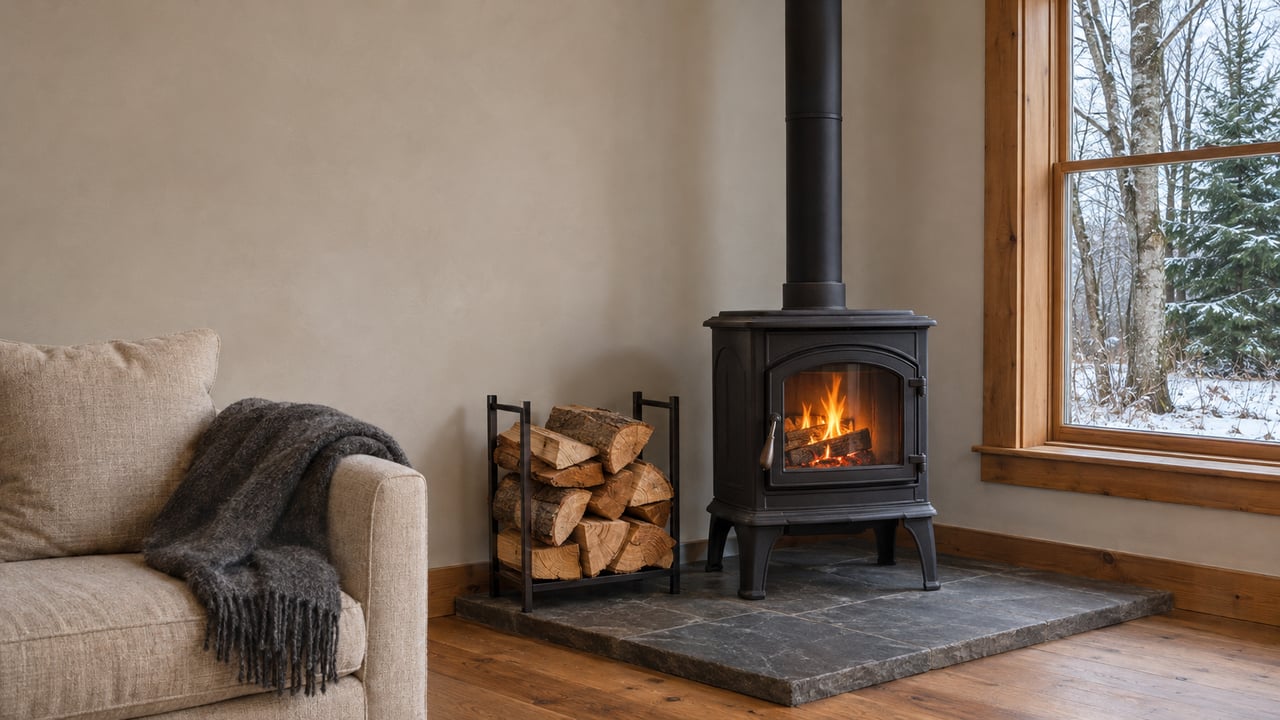
Wood has played this role in the Kingdom before. The regional plan records that when oil prices were high, many Northeast Kingdom residents turned to alternative fuels, especially wood pellets. This fall wood has been in demand again. In the same WCAX report, Taz Duranleau of Stove and Flag Works in Williston said the store had sold up to 150 wood and pellet stoves that year, against a usual 50 to 60, to customers "trying to supplement their heat, from oil, propane, what they have." WCAX put firewood at $200 to $500 a cord statewide and said the average household burns about two to three cords. Efficiency Vermont told the station it has rebates that can take $400 off a new stove.
Closer to home, Brandon Wells Firewood in St. Johnsbury lists green hardwood at $350 a cord, semi-seasoned at $400 and dry at $450, with a two-cord minimum. The business delivers into Orleans County. Delivery is $15 a cord within 20 miles of St. Johnsbury and $3 a mile beyond that. At those prices, a two-to-three-cord winter costs $900 to $1,350 in dry wood before delivery. When the supplier's stock was checked in late September, the dry and semi-seasoned wood was already sold out. That matches what Vermont Public reported last February: affordable dry firewood was in short supply, and fewer loggers and firewood suppliers were limiting the supply.
For a buyer, the stove itself is only half of the hedge. A house that comes with a covered woodshed, a stacked supply or a seller willing to pass along their firewood contact gives you a wood source you can use this winter. With a bare hearth in late November, you're buying wood when the dry supply has already sold.
The listing tells you the system type. What it costs to run shows up in the seller's records. On homes that reach the offer stage, these are the requests that answer the question:
For a home on Barton Village or Orleans Electric service, the village utilities are part of the Vermont Public Power Supply Authority. Its 2026 incentives include a $200 add-on for heat pumps installed in weatherized homes, for purchases made by December 31, 2026. If a winter's fuel bill would strain the household budget, Northeast Kingdom Community Action has an outreach office at 70 Main Street in Newport. By early October, its economic access director, Heather Alger, told Vermont Public the agency was getting upwards of 20 calls a day about fuel and electric bills, more of them from moderate-income households than in past years. You can see how running costs fit with a monthly payment in the mortgage calculator, and the Orleans County page covers the towns themselves. For how prices and selling times have moved across the county, see this look at the Orleans County market.
The prices and rates here are dated snapshots meant as general information, not financial or tax advice. Confirm the figures for any specific property with the utility, your fuel supplier and the right professional before you rely on them.
If you're comparing homes in Orleans County and have questions about how a heating setup fits your plans for this winter, Mykayla Tanguay is happy to talk it through with you. Let's Connect.
Stay up to date on the latest real estate trends.
If you’re looking for a real estate partner who combines local knowledge, polished marketing, and personal attention, MyKayla offers a full-service experience designed around your goals. She works with luxury buyers and sellers, waterfront property owners, land clients, commercial prospects, and investors who want a resource they can rely on from the first conversation to closing.