Private Road Issues in Lake Willoughby Property Closings
September 10, 2026
If you are buying or selling a camp on Lake Willoughby with a VA loan, the private road warning you have read about on national mortgage sites almost certainly does not apply to you the way it applies to a buyer in most of the country. According to Veterans United, Vermont is one of a small handful of states, along with California, Connecticut, and Oregon, where a VA lender cannot hold up a loan simply because the camp sits on a shared private lane with no signed maintenance agreement. State law already covers that. What state law does not cover, and what still shows up in title searches on some of the older camps ringing Lake Willoughby, is a different piece of paper entirely, and it is the one that actually matters at the closing table regardless of loan type.
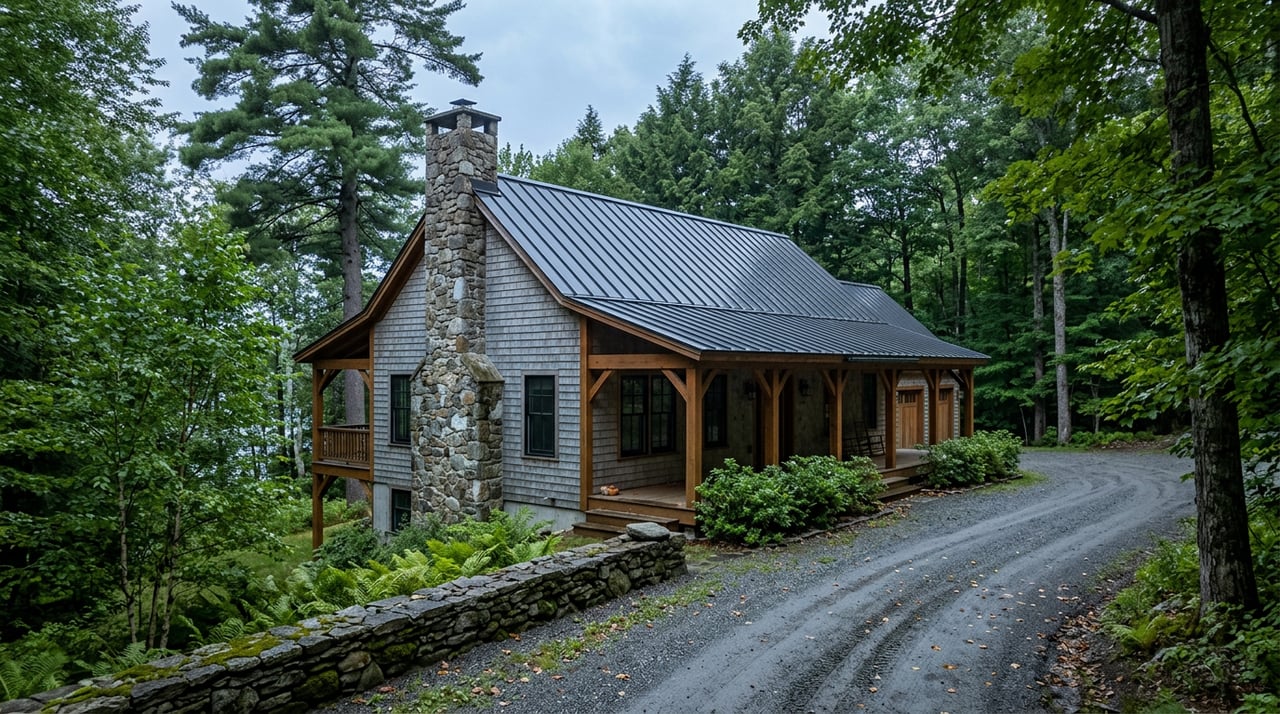
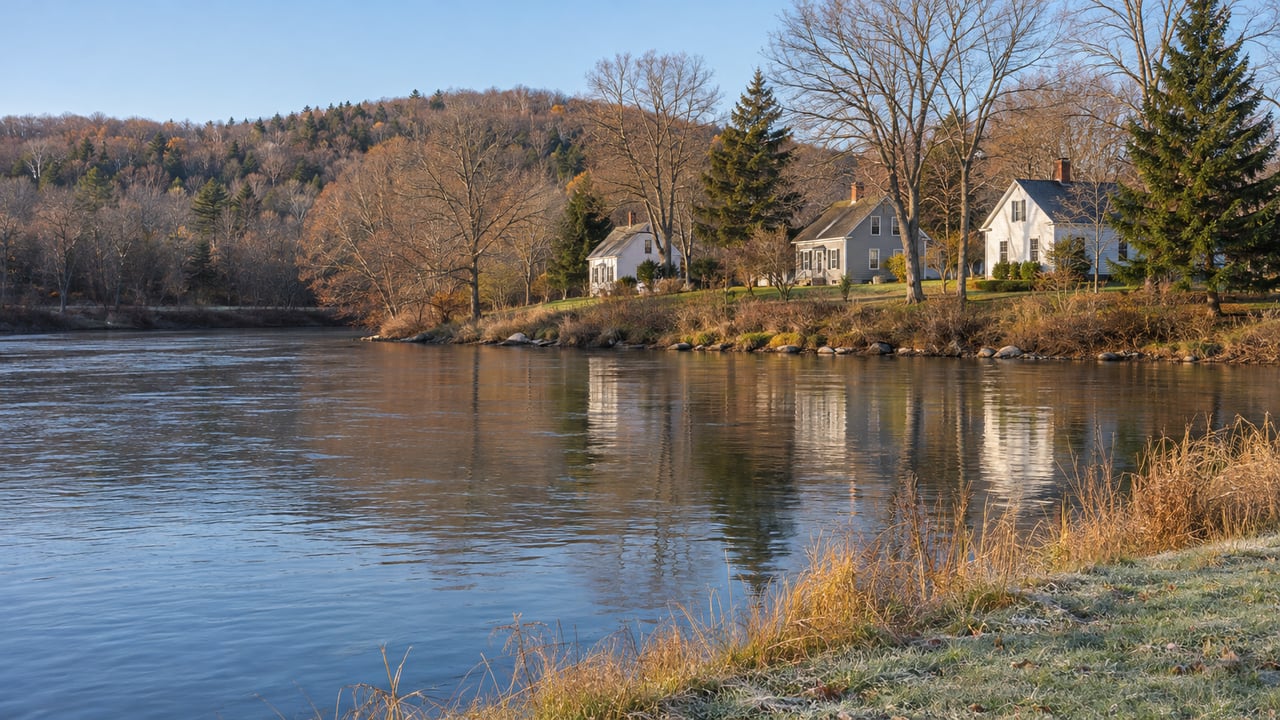
Lake Willoughby sits in the town of Westmore, a glacial lake of 1,653 acres running between the cliffs of Mount Pisgah and Mount Hor, a formation locals call Willoughby Gap. The Vermont Department of Forests, Parks and Recreation lists its maximum depth at 308 feet, deep enough that in 2010 Yankee magazine ranked it the third-best lake in New England. Westmore itself sits at a point where Orleans, Essex, and Caledonia counties meet, bordered by Charleston, Brighton, Newark, Sutton, Barton, and Brownington. Most of the camps that make the lake what it is were built generations ago on lanes that climb away from Route 5A, lanes that were never platted the way a modern subdivision road would be.
Across most of the country, a home reached by a private road runs into a specific, well-documented lending snag. Lenders, especially those backing VA loans, have historically wanted proof that every property owner who benefits from a shared road has signed a joint agreement spelling out who plows it, who grades it, and who pays for the gravel. Without that signed agreement, a sale can stall for weeks while a title company or attorney tracks down neighbors, some of whom may not want to sign anything, to formalize an arrangement that has worked fine informally for decades.
That single requirement has been enough to sink financing timelines on rural properties nationwide, which is why so much of the online guidance aimed at rural buyers treats it as a given hurdle.
Vermont removed that hurdle by statute over a decade ago. Under 19 V.S.A. § 2701-02, if there is no written agreement covering a shared private road, everyone who benefits from that road is automatically required to contribute rateably to its upkeep, and any one of them can sue to enforce it. The law does not ask neighbors to agree on paper. It assumes the obligation exists whether they have written it down or not.
That statute is exactly why the U.S. Department of Veterans Affairs, in a circular issued in November 2022, stopped requiring a separate joint maintenance agreement for VA loans in states where law already handles the obligation. Guidance published earlier this year confirms the policy remains in place: VA loans nationwide now accept a recorded permanent easement or right of way as sufficient proof of access, without a separate signed maintenance contract. Vermont buyers benefit from that shift more directly than buyers almost anywhere else, because the state's default rule is precisely the kind of law the VA had in mind.
Strip away the legal language and the practical effect is simple: the state already tells your camp road neighbors they owe their fair share, so a lender no longer needs a signed promise saying the same thing.
Here is where the reassurance stops. The statute settles who pays. It does nothing to establish that you have a legal right to drive to your camp in the first place.
A recorded easement or right of way, showing continuous legal access from the camp to a public road, is an important part of the paperwork. That document does not come from a statute. It comes from a deed, a survey, or a corrective filing at the town land records office, and on a meaningful number of older camps around Lake Willoughby, it was never created in the first place.
The reason traces back to how a lot of this shoreline was originally held. When a single family owned the whole hillside and simply built a camp for each generation along the same climbing lane, nobody thought to grant themselves an easement across their own land. Decades later, once those parcels were split among heirs or sold outside the family, the lane serving three or four camps often has no recorded document tying it to a public road at all. Vermont's rateable-share statute solves the plowing bill. It does not solve the missing deed language, and a lender's underwriter cares far more about the second problem than the first.
The pattern is common enough around Lake Willoughby that it is worth naming directly. Camps reached from Route 5A by a private lane, rather than sitting on frontage along the public road itself, are exactly the properties most likely to carry an easement gap. A few miles west, Crystal Lake in Barton is the other major Orleans County lake worth the same scrutiny, since any camp reached by a shared lane rather than direct road frontage can carry the same gap regardless of which lake it sits on.
The Westmore Association, the volunteer group founded in 1968 that funds the lake's invasive species Greeter Program and monitors water quality, is a genuine local resource for anyone buying on Lake Willoughby. It is not, however, the entity tracking which camp roads have recorded easements and which don't. That work happens parcel by parcel, at the title company and the town clerk's office, and nobody is doing it proactively on a seller's behalf.
Add in that Westmore borders three counties, and it is worth confirming which town's land records actually hold the deed history for a given lane, since a road serving camps near a town line can occasionally cross jurisdiction in ways that are easy to miss on a quick search.
For a seller with a camp on a private lane, the fix is straightforward if it happens early:
For a buyer, the questions are just as specific:
Does Vermont's statute mean the road issue is fully handled? It handles who pays for upkeep when there is no written agreement. It does not create or replace a recorded easement.
Do all loan types treat this the same way as VA loans? Not necessarily. The VA's 2022 policy change applies to VA-backed loans specifically. According to Bateson Law, conventional loans backed by Fannie Mae have at times still preferred a signed joint agreement in addition to a recorded easement, while Freddie Mac, FHA, and USDA loans generally accept the recorded easement on its own. Confirm the specific requirement with your lender rather than assuming one loan program's rule applies to another.
Is this only a Lake Willoughby issue? No. Any camp anywhere in the region reached by a shared private lane rather than direct frontage on a public road, including on Crystal Lake in Barton, can carry the same gap. It is worth checking on any waterfront or hillside property reached by a private lane, not just those on Willoughby.
If you are weighing a camp on Lake Willoughby, or getting one ready to list, the road question is the kind of detail that is far easier to sort out in September than in the middle of a January closing. MyKayla Tanguay works with buyers and sellers across Orleans County who are navigating exactly this kind of local paperwork, and can help you figure out what your specific lane actually needs before it becomes a deadline. Let's Connect.
This article is general information, not legal, tax or financial advice. Consult a qualified professional about your situation.
Stay up to date on the latest real estate trends.
If you’re looking for a real estate partner who combines local knowledge, polished marketing, and personal attention, MyKayla offers a full-service experience designed around your goals. She works with luxury buyers and sellers, waterfront property owners, land clients, commercial prospects, and investors who want a resource they can rely on from the first conversation to closing.