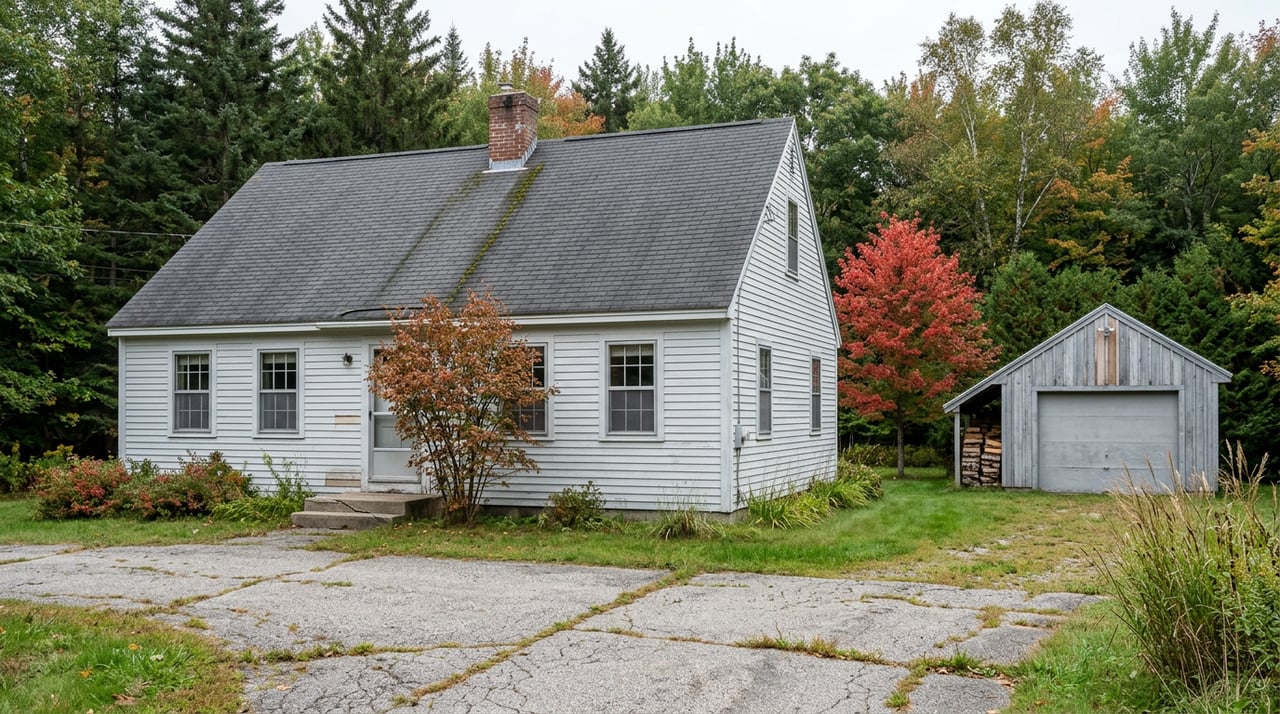
The Asterisk on Essex County's Cheapest-in-Vermont Price Tag
August 27, 2026
August 27, 2026
Why does a county with the lowest home prices in Vermont and the most acreage listed for sale in the state still take longer to sell a house in than almost anywhere else in the Northeast Kingdom?
The short answer is that the numbers describing Essex County are measuring something different than they appear to. A median price built from a handful of closings behaves differently than one built from hundreds. An acre of listed land in a county built on a nineteenth century timber economy is not automatically an acre you can build a house on. Both of those facts matter more here than in almost any other Vermont county, and neither shows up until you are already comparing towns, or already under contract.
In January 2026, Essex County home prices were down 23 percent year over year, with a median sale price of $133,000 and homes taking an average of 136 days to sell, up from 117 days the year before. Only six homes sold that month, up from four the year before.
Six sales is not a market trend. It is a small enough number that a single farmhouse or a single fixer-upper closing can move the county median by tens of thousands of dollars. Widen the window to a full year and the picture changes again: over the trailing twelve months, one widely used market tracker put Essex County's median home price at $272,323, built from 134 total sales across the entire county, with home values ranging from $28,087 to $1,134,000.
Both numbers are real. They are just measuring different slices of a market where the sample size is always small enough to swing. Essex County has been flagged for years by analysts tracking Vermont home prices specifically because it has so few transactions that ordinary year-over-year comparisons behave differently than they do in busier counties. That is not a knock on the county. It is a reason to treat any single month's headline price as a snapshot of who happened to close, not a signal about where values are heading.
Essex County's land market tells a similar story from a different angle. By one measure, the county has the most rural land listed for sale in Vermont by total acreage, with roughly $45 to $47 million worth of farms, ranches, and undeveloped land on the market recently, representing somewhere between 7,700 and 8,000 acres. By another measure taken at a different point, Essex County ranked 13th out of Vermont's 14 counties for total acreage currently advertised. Both figures came from legitimate land listing trackers. The gap between them is the point: in a county this size, one or two large timber tracts coming on or off the market can swing the total acreage figure enough to flip the county's ranking in either direction within the same year.
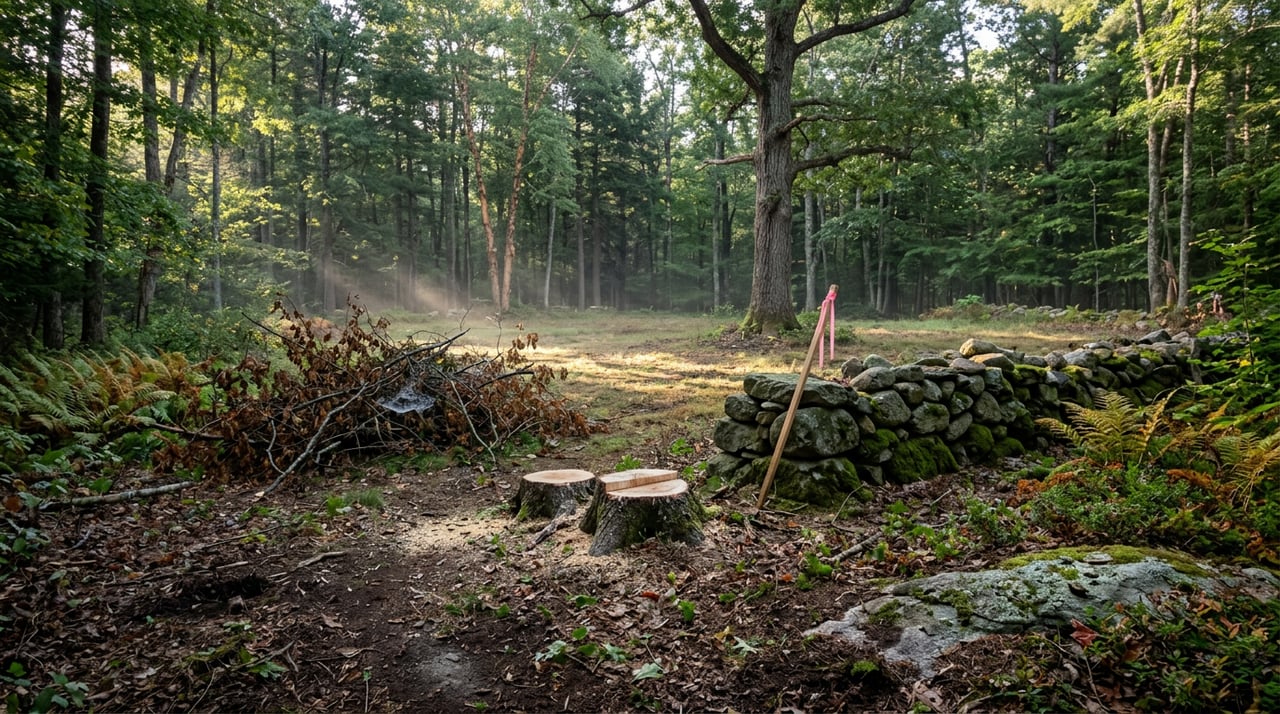
That volatility connects to something older than any current listing. On April 5, 1999, Governor Howard Dean signed the state's portion of what became known as the Champion Lands deal, a sale covering 133,000 acres of forestland in Essex County, roughly one third of the entire county spread across 14 towns. Champion sold its largest tract to another timber company specifically so it would remain working forestland rather than being subdivided. That single transaction permanently shaped how much of the county's land base could ever become residential lots, and it explains why a meaningful share of what shows up in a land search here is timberland under conservation easements or Current Use enrollment rather than raw acreage waiting for a driveway.
You can see the pattern in individual listings. A large East Haven timberland tract known as Starr Mountain, currently on the market, carries a Forest Legacy conservation easement that keeps the land in timber production and recreational use while limiting how it can be developed, and it is enrolled in Vermont's Use Value Appraisal program. Properties like this are genuinely for sale. They are just not the same product as a cleared building lot, even when they show up in the same search results.
Conservation activity in the county has not slowed either. In 2024, the Vermont Department of Forests, Parks and Recreation purchased a 15-acre island in Island Pond along with a three-acre lakeshore parcel, adding both to Brighton State Park with support from the Vermont Land Trust. It is a small transaction next to the Champion deal, but it is a reminder that Essex County's land base keeps moving toward permanent protection, not just toward the open market.
Here is the friction that catches people off guard once they are past the searching stage and into an actual purchase.
Vermont's Current Use program, officially the Use Value Appraisal program, lets landowners with at least 25 contiguous acres of qualifying forest or agricultural land pay property tax based on the land's productive value rather than its market value. It is a significant savings, and it is a major reason so much Essex County acreage stays intact rather than getting carved into smaller parcels. But the program comes with a lien attached to the deed. If you develop the land or withdraw it from the program, the state assesses a Land Use Change Tax equal to 10 percent of the fair market value of the parcel or portion being developed.
The program does allow a 2-acre exclusion for a housesite, and since January 1, 2021, that exclusion can cover multiple dwellings. But if you buy a 40-acre enrolled parcel and want to carve out a 10-acre lot for a house and outbuildings, you are triggering the tax on that 10-acre portion. Vermont's own rules go further: any transfer that creates a parcel smaller than 25 acres counts as development, whether or not anything gets built on it, and the tax is due regardless.
Enrollment has its own deadline that matters most to relocators. New applications are due to the state by September 1 to take effect for the following tax year. Buyers moving from Massachusetts, New York, or Connecticut who assume a parcel's low tax bill will simply carry over sometimes miss that window entirely, and end up paying full market-rate property tax for a year before the Current Use benefit kicks in.
None of this means Essex County land is a bad buy. It means the acreage figure on a listing and the tax line on a closing statement are two different conversations, and the second one should happen before you write an offer, not after.
| Town | Price signal | What it tells you |
|---|---|---|
| East Haven | $395,000 median listing price | The priciest town in the county |
| Norton | Roughly $145,000 average | The most affordable town in the county |
| Island Pond, in the town of Brighton | $43,400 low end, 22 active listings, 22 recent sales | The most active market and the widest price spread in the county |
A county-wide median of $272,323 sits comfortably between those extremes, which is exactly why it tells you so little about what a specific town or a specific parcel will actually cost. East Haven and Norton are both real Essex County towns with real recent sales, and they are describing two different housing markets that happen to share a county line.
If I buy land that's already enrolled in Current Use, do I have to keep it enrolled? No, but withdrawing it triggers the Land Use Change Tax on whatever portion you take out, calculated at 10 percent of that portion's fair market value. Staying enrolled keeps the tax benefit and the lien in place.
How much land do I need to build a house without paying the tax? The program allows a 2-acre exclusion for a housesite, and that exclusion can now cover more than one dwelling. Anything beyond that exclusion counts as development if it is carved off an enrolled parcel.
Does a conservation easement mean the land can never be built on? Not always, but it depends entirely on the specific easement's terms. Forest Legacy easements like the one on the Starr Mountain tract are written to protect timber production and recreational use, which is a different restriction than a residential building envelope. Read the easement itself, not just the listing description, before assuming what it allows.
Essex County's price tag and its acreage totals are both accurate. They are also both thinner and more encumbered than they look from a search results page. If you are weighing this county against Orleans or Caledonia, the number worth asking about is not the median. It is what specific parcel or specific town you are actually comparing, and what is attached to the deed.
If you are trying to figure out what a specific Essex County property or town actually offers once you look past the listing price, MyKayla Tanguay can walk through it with you town by town. Let's Connect.
Stay up to date on the latest real estate trends.
If you’re looking for a real estate partner who combines local knowledge, polished marketing, and personal attention, MyKayla offers a full-service experience designed around your goals. She works with luxury buyers and sellers, waterfront property owners, land clients, commercial prospects, and investors who want a resource they can rely on from the first conversation to closing.