Essex County UTG Real Estate: A Guide for Land Buyers
September 3, 2026
The Vermont Supreme Court once summed up six pieces of Essex County in a single line, noting that they "occupy a contiguous area in Essex County of approximately 103,000 acres." No selectboard passed a bylaw about it. No town meeting voted on it. The court was simply describing a legal reality: Averill, Avery's Gore, Ferdinand, Lewis, Warner's Grant, and Warren's Gore are not towns in the way every other place on a Vermont map is a town. They are unorganized, and if you are looking at a camp or a building lot in one of them, that word is going to shape your purchase more than the price per acre will.
"Unorganized" gets read as a warning label or a bargain sign, depending on who is looking. Neither read is quite right. These six places have real governance, real tax collection, and real deed recording. It just does not run through a town hall, because there isn't one. Understanding what stands in for a town hall, and what does not, is the actual homework before you write an offer here.
Vermont law creates a single Supervisor and a Board of Governors to handle what a selectboard, town clerk, and lister would ordinarily split among themselves across all six of these unorganized towns and gores. The Essex town policies identify the Supervisor as the legislative body of the UTG, the same way a selectboard is the legislative body of an organized town. That person, backed by an elected Board of Governors, is who administers roads, collects taxes, and manages the UTG's finances for the entire 103,000 acre footprint.
Most of that footprint is empty of people. Only Averill, Ferdinand, and Warren's Gore have any permanent residents at all. Ferdinand recorded 33 year round residents in the 2000 census, the largest population of the six. Across all six towns combined, there were 24 registered voters and three schoolchildren that same year. A local development plan for the UTG puts the combined acreage slightly higher, closer to 104,000 acres, which tells you something useful on its own: even the people who administer this land don't agree on the exact number, because so little of it has ever needed a precise survey for local governance purposes.
The first physical government building in the UTG's history wasn't completed until 2010, when residents approved building a UTG office in Ferdinand. Before that, there was no office at all. Basic goods and services for anyone living in the UTG have always come from adjacent towns, primarily Island Pond, Canaan, and Newport.
In every organized town in Vermont, deeds are recorded at the town clerk's office. In Averill, Avery's Gore, Ferdinand, Lewis, Warner's Grant, and Warren's Gore, there is no town clerk. Deeds.com notes that deeds and other real estate documents for all six are recorded through the UTG Office in Ferdinand instead, and the transfer tax return that has to accompany any conveyance still gets filed with the Vermont Department of Taxes rather than a local office, using the same PT-172 and PT-173 forms used statewide.
This matters for anyone doing title work. A title search company or closing attorney who assumes they can call the nearest town clerk for a deed history on a UTG parcel will hit a dead end. They need to know to go to Ferdinand, not to Canaan or Norton or any of the organized towns that happen to border these six.
The three schoolchildren the state counted in 2000 across the entire UTG were not attending a school inside the UTG, because none operates there. Essex North Supervisory Union, headquartered in Canaan, is the body responsible for education arrangements affecting the Unified Towns and Gores, and Vermont's own supervisory union records list the UTG among the unorganized towns and gores that tuition students out rather than run a district school.
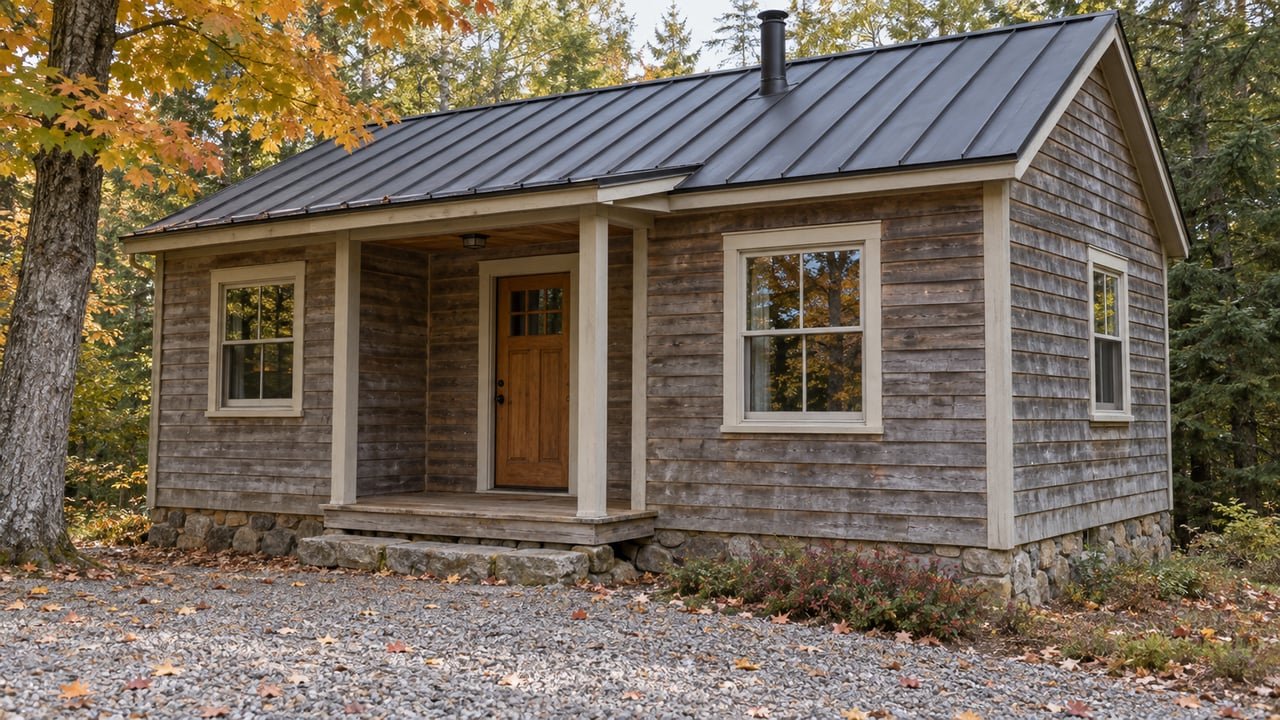
For a family thinking about a year round move to a camp near Averill's lakes, this is not a minor footnote. It means confirming which district a given parcel is tuitioned to, what the tuition arrangement covers, and how far the actual commute to school will be, since there is no in-district building to compare against.
Of the six UTGs, only Averill has any town maintained roads at all. Three of them, to be exact: Cottage Road, Forest Lake Road, and Canaan Hill Road, all classified as Class 3 roads under Vermont's road classification system. Everywhere else across roughly 103,000 acres, road maintenance is not a municipal function, because there is no municipal road budget covering it.
That doesn't mean every other road is impassable or informal. Many are maintained privately, by landowner agreement or by whoever benefits most from keeping the access open. But it does mean a buyer looking at a parcel outside Averill's three named roads should ask a very specific question before assuming anything: who actually plows this road in January, and is that arrangement written down anywhere, or does it depend entirely on goodwill.
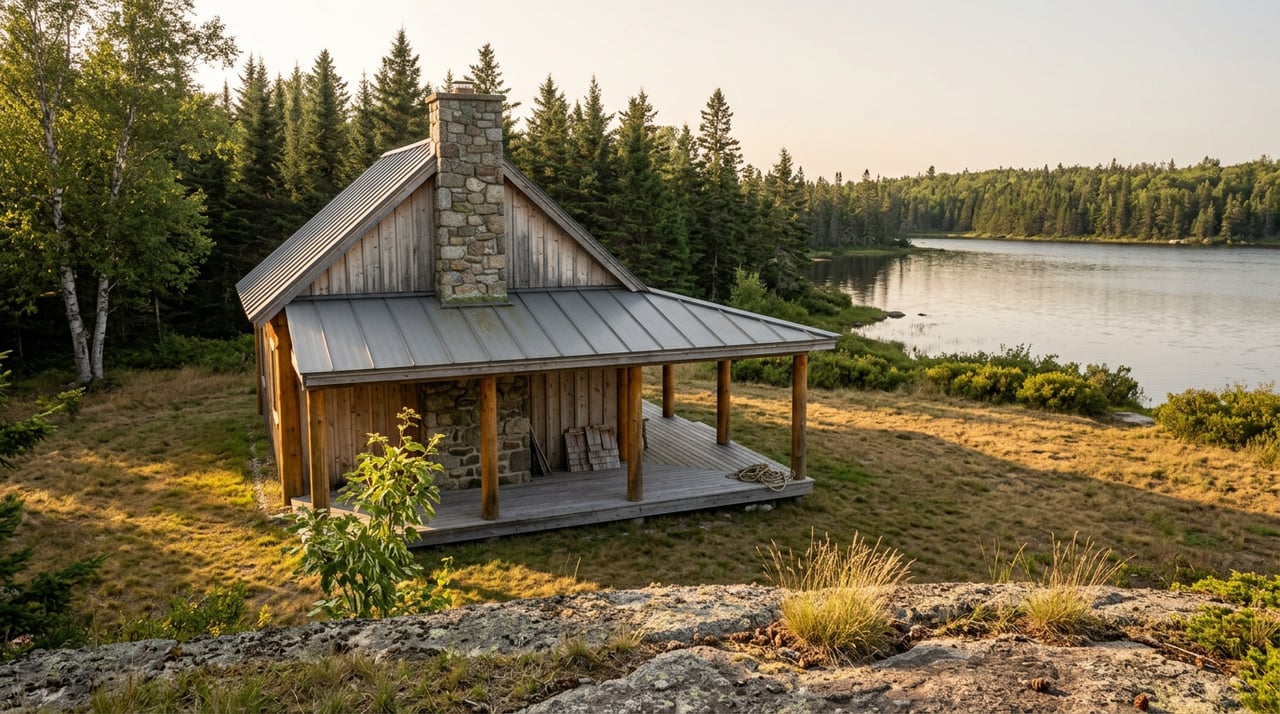
None of this explains why individual buyers can purchase lakefront land here in the first place. That answer goes back to 1999, when Champion International Paper Company sold its Vermont holdings. The sale was large enough to reshape the region: some of that land became state owned conservation land, including the 76 acre Mollie Beattie Bog in Lewis, now recognized for rare plant and animal species. But another portion of the former Champion lands, particularly around the Averill lakes, went to private buyers instead, and the resulting surge in camp and home sales was significant enough that it forced changes to how the UTG itself was administered.
In other words, the reason a lakefront lot near Great Averill Lake or Little Averill Lake can be privately owned today, rather than locked inside an industrial timber portfolio, traces directly back to a single corporate land sale a generation ago. That history is worth knowing because it explains the character of the inventory you'll find now. As of late August 2026, roughly three dozen properties are listed near Averill, with asking prices averaging around $435,500 and land alone running close to $12,484 an acre. That is a small, thin market by design. It didn't grow the way an organized town's housing stock grows, through decades of ordinary turnover. It opened up in a specific window because a paper company decided to exit the state.
Say you're weighing a camp on Great Averill Lake against a similarly priced lot on organized town water elsewhere in Essex County, in a place like Canaan or near Island Pond in Brighton. The price per acre might land in the same range. What sits behind that price does not.
The organized town lot comes with a functioning selectboard, a town clerk who records your deed down the street, a zoning process if the town has adopted bylaws, and a public school your kids can walk into. The UTG lot comes with a Supervisor and Board of Governors instead of a selectboard, a deed recorded in Ferdinand instead of at a town office near you, tuition arrangements instead of a home district school, and road access that may or may not be anyone's official responsibility depending on exactly where the parcel sits.
One more detail is worth flagging if you're thinking about building or subdividing rather than just buying an existing camp. Vermont's Act 250 development review has permit requirements.
Who do I call if my road washes out? If you're on one of Averill's three Class 3 roads, the town maintenance system that covers the rest of Vermont applies. Anywhere else in the UTG, start by asking the current owner or the UTG office in Ferdinand who has historically handled it, because there may be no default answer.
Is there a school inside the UTG? Students are tuitioned out through Essex North Supervisory Union in Canaan, and details vary by parcel, so this is worth confirming before you're several months into a purchase.
Is the property on the grid? Check carefully. Vermont Electric Cooperative's distribution lines reach only a small share of UTG land area, and off-grid living is common enough here that it shouldn't come as a surprise at closing.
Land in Essex County's unorganized towns and gores is real, buildable in the right spots, and priced the way thin, historically unusual markets tend to be priced. It just comes with a different operating manual than anywhere else in the county, and that manual is worth reading before you fall for the view.
If you're weighing a camp near the Averill lakes against options elsewhere in Northern Vermont, MyKayla Tanguay can walk through what a specific parcel's governance, road status, and school arrangement actually look like before you write an offer. Let's Connect.
This article is general information, not legal, tax or financial advice. Consult a qualified professional about your situation.
Stay up to date on the latest real estate trends.
If you’re looking for a real estate partner who combines local knowledge, polished marketing, and personal attention, MyKayla offers a full-service experience designed around your goals. She works with luxury buyers and sellers, waterfront property owners, land clients, commercial prospects, and investors who want a resource they can rely on from the first conversation to closing.